Carpenter in Montgomery, AL: Wood Rot, Structure & Finish Work
Montgomery Carpentry serves homeowners across Montgomery and the surrounding areas with honest, skilled carpentry work on the homes that define this region. From the Craftsman bungalows and Tudor cottages of the Garden District and Old Cloverdale to the Victorian cottages of Capitol Hill, the raised cottages downtown, and the brick ranches and two-story homes spreading through Dalraida, Prattville, Pike Road, Millbrook and beyond, we know the building stock and the way it settles and weathers here. Whether you are searching for a carpenter near me in Montgomery to address wood rot advancing through a sill or fascia, termite damage discovered after a pest inspection, or a floor that has gone soft and out of level, we approach the work with the same care: read the pathology honestly, explain what you are looking at, and propose repair before replacement whenever the wood justifies it.
We handle the full range of residential carpentry. That includes structural work such as floor joist and subfloor repair, beam replacement and load-bearing wall removal, and framing carpentry for new openings and additions. It includes the rot and insect damage repair that the Montgomery climate and older housing stock make so common here. And it includes the finish carpentry, trim, crown molding, custom built-ins and door installation that bring a house to life. We are a local shop where the same carpenters do the work, not a national franchise dispatching from a call centre. Call (334) 721-7938 to talk through what you are seeing, or request a free wood rot inspection to get started.
Why Wood Fails in Montgomery, and How We Read It
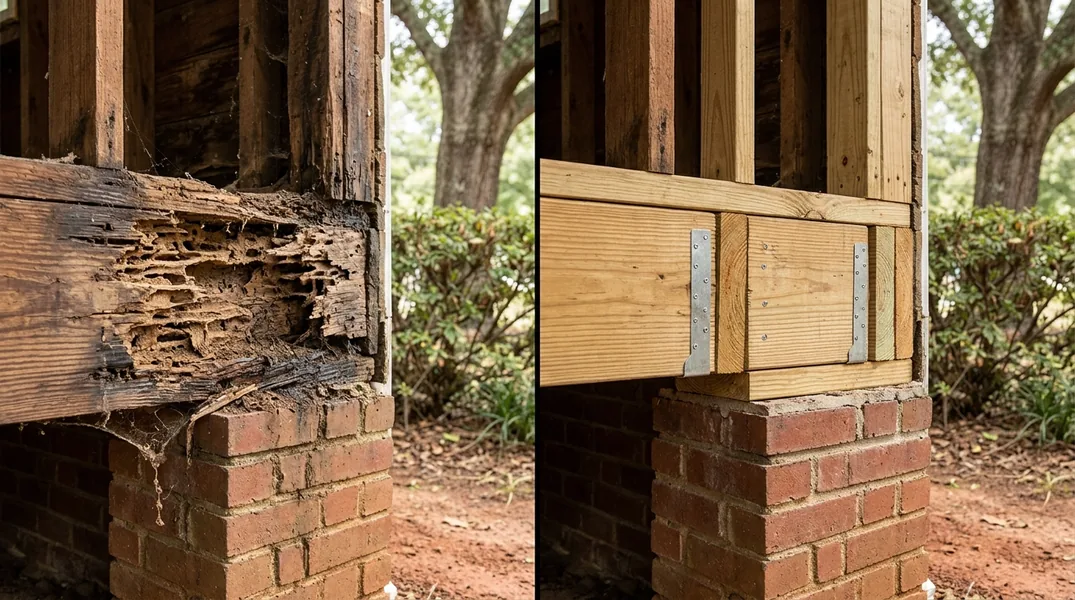
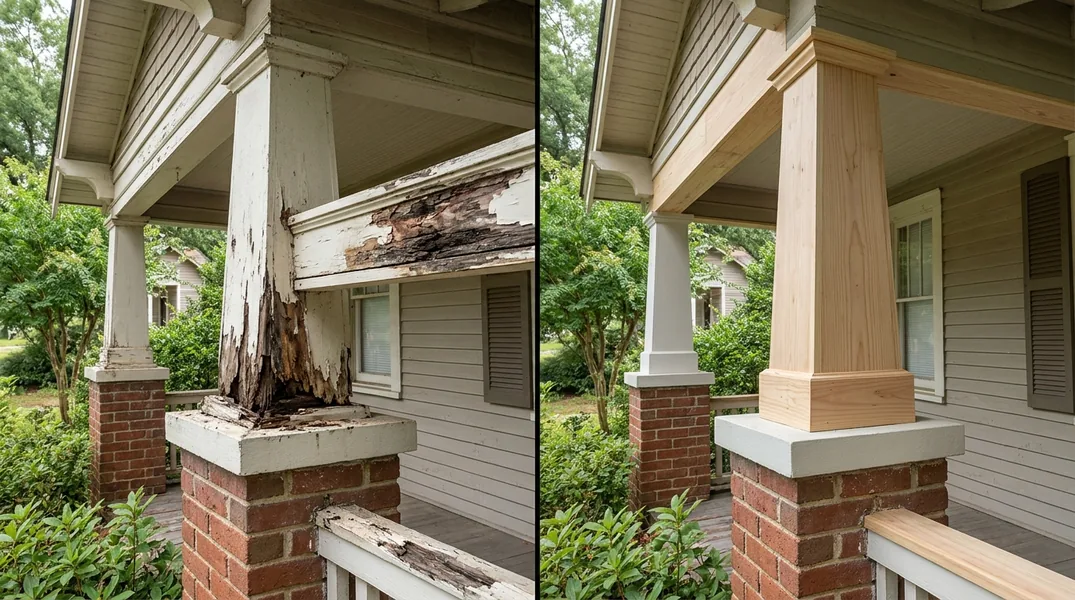
Wood fails here in three distinct ways, each with its own signature and its own water source. Dry rot is a fungus that eats the cellulose in wood, and despite its name it requires sustained moisture to thrive, not standing water. The hot, humid subtropical climate of Montgomery, combined with the year-round rain and the trapped moisture in crawlspaces under older homes, creates exactly the conditions dry rot needs. It works into sills, rim joists and the bottom of exterior framing where moisture is held against the wood. Wet rot appears at thresholds, window sills, deck ledgers and fascia where water collects and sits rather than draining away. The spring and late-fall storms that push wind-driven rain behind trim and door frames, combined with the clay soils and the bluff topography that can direct water toward foundations, make this a regular problem. Termite damage hollows the wood from inside while the paint film and outer shell often look sound. The subterranean termite pressure in this region is high, and the porch framing, sill plates and floor joists in older homes are vulnerable targets.
We read wood damage by probing to find where sound wood begins, by checking the framing and structure behind the visible surface, and by tracing the water path that fed the decay. A member with cosmetic surface loss but sound section underneath can be cut out and rebuilt in place. A member that has lost too much of its cross-section gets replaced, because filler over rot is not a repair and will fail again. On insect damage, we work from your own pest inspection report. We repair and replace the damaged wood that termites or beetles have hollowed out, but we do not treat, fumigate or perform pest control, which is a separate regulated trade. The key point is this: if the water source is not closed, the repair fails again. We identify that source and make sure it is addressed, or we tell you plainly that the repair is temporary.
Wood rot and dry rot repair and termite damage repair are the calls we take most often here, and they deserve prompt attention. A soft spot in a deck frame, a spongy sill, or framing that has been flagged on a pest inspection should be looked at soon so that the damage can be measured and the repair quoted honestly. Call (334) 721-7938 or request a free inspection to have it assessed.
Structural Carpentry in Montgomery: Joists, Beams and Settling
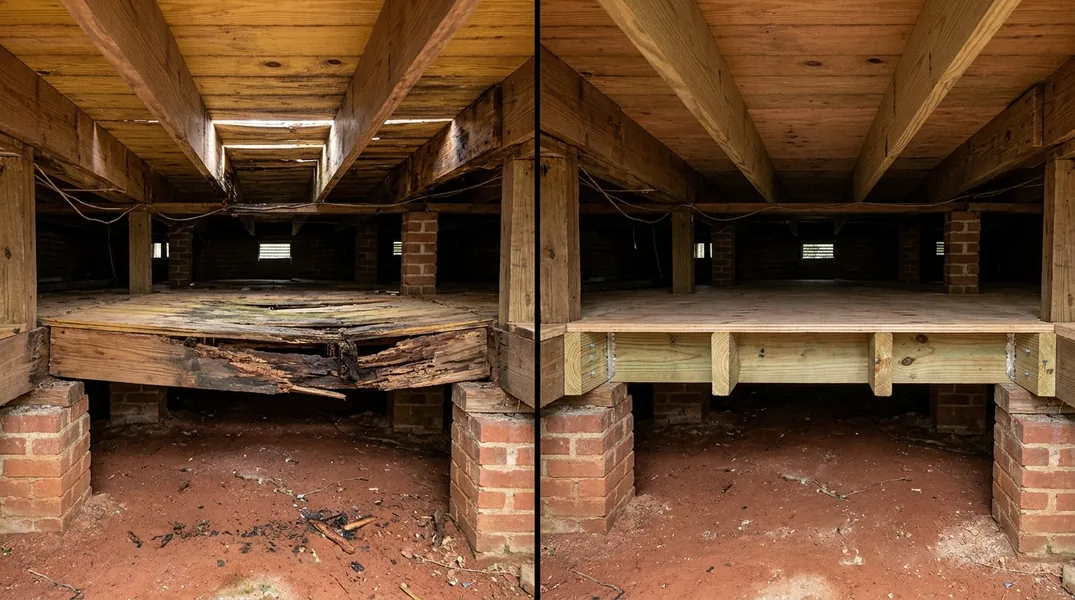
Structural carpentry in Montgomery means working with homes that have settled over decades. A century-old Craftsman bungalow or a Victorian cottage has moved and adjusted to its foundation many times over, and a sloping floor or a door that sticks in its frame is often simply the normal condition of an old house rather than a sign of active failure. What matters is whether something is still moving and how the member is performing where it carries load. Floor joist and subfloor repair may mean sistering a joist (running a new member alongside the damaged one and fastening them together to share the load) or replacing a section of subfloor. Sill plate and rim joist repair, which sit at the junction of the house and the foundation, are common in older homes where moisture and insects have taken their toll. We replace what cannot be repaired and reinforce what can, always working to preserve the structure and keep costs honest.
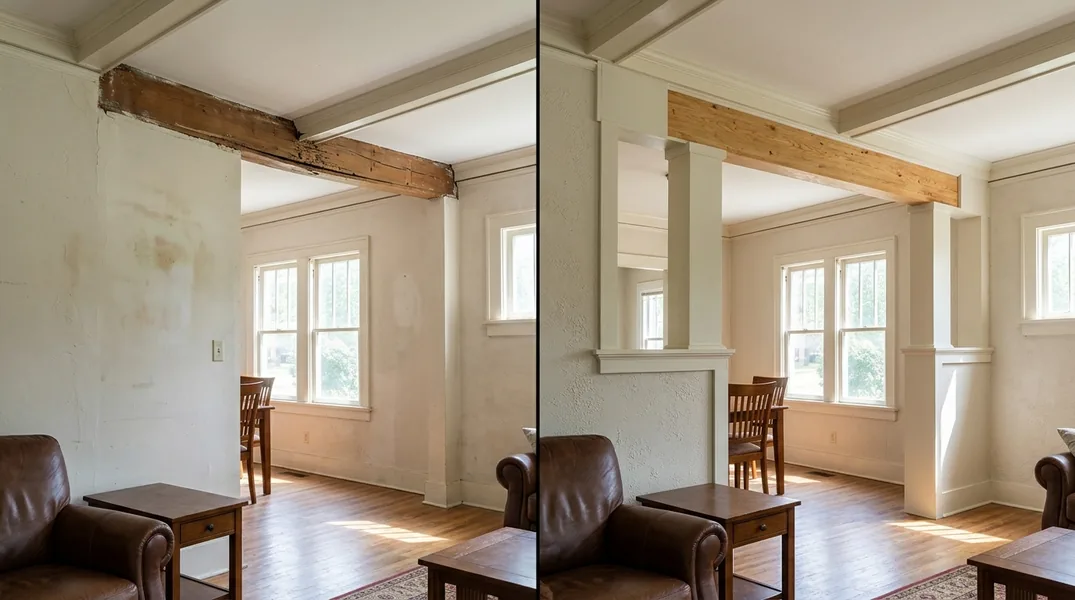
Larger structural work such as beam replacement and load-bearing wall removal requires more. Beam sizing and the removal or alteration of a load-bearing wall commonly require engineered drawings and calculations from a licensed structural engineer, along with a permit from the local building department. We build to those drawings rather than produce them. The same applies to major framing alterations. We work with engineers and building officials as part of the process, but the structural design itself is their domain. This ensures that the work is safe, code-compliant and right for your home.
Finish Carpentry and Built-Ins in Montgomery Homes
Finish carpentry is where a house becomes a home, and Montgomery's housing stock is full of it. The bay windows, built-in shelving, and original period millwork in the Craftsman bungalows and Victorian cottages downtown and in the Garden District are worth preserving and matching rather than replacing. We install casing and baseboard with coped joints instead of caulked corners, scribe trim to walls that are neither flat nor plumb, and match existing profiles so that new work looks like it belongs. Crown molding and baseboard installation, custom built-ins and shelving, and cabinet and vanity installation all call for the same precision and eye for detail. The compact floor plans and out-of-square openings that are common in older homes mean that every piece of trim is a fit-and-finish problem, and that is where craft shows.
Interior and exterior doors, stair and railing repair, and the details that tie a room together are the work we do with the same care we bring to structural repair. A consistent reveal around a door opening, a baseboard that runs true, and a stair that is safe and level all speak to the same standard. We know the houses here, the way they have settled, and what it takes to make new work sit right in an old frame.
Permits, Repair-or-Replace & What We Do Not Do
Permits and inspections are part of responsible carpentry work. In most jurisdictions, a permit is commonly required for structural work such as removing or altering a load-bearing wall, replacing beams or joists, and making changes to exterior decks and stairs. Requirements vary by location and by the scope of the work, so the threshold for what needs a permit is not the same everywhere. Before you start any project, contact the Montgomery building department to verify what permits apply to your specific work. We can help you understand what is involved and what the process will be, but the building department itself is the authority on what is required.
On the decision between repair and replacement, the criteria are straightforward: how much sound wood is left, whether the water source can be closed, and what the two options cost. We quote both when both are real options, and we tell you plainly which one makes sense. We are fully insured and can help you document damage for an insurance claim, though coverage and claim outcomes depend on your policy and your insurer. We do not offer structural engineering, mold testing, pest treatment or fumigation, which are separate trades. What we do is repair and replace the wood, working from your own pest inspection report where insects are involved. Requirements vary, and thresholds differ, so always verify with the Montgomery building department before starting your project.