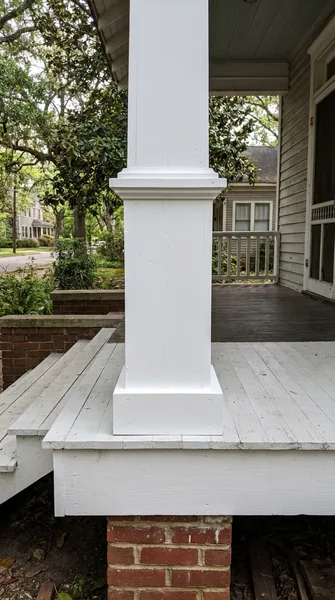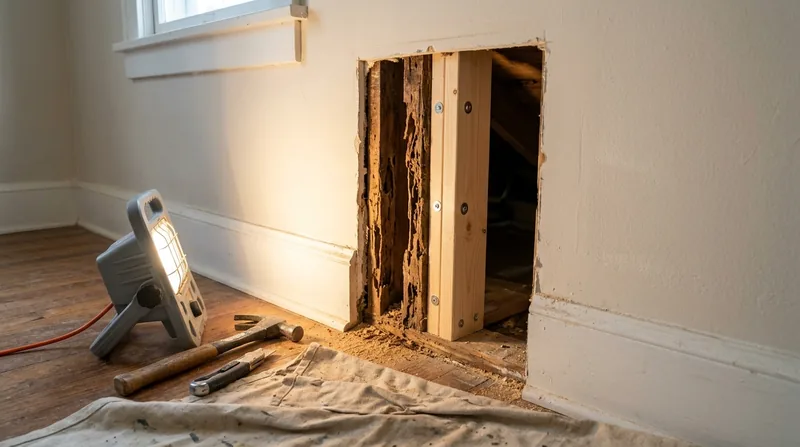




Montgomery's warm, humid subtropical climate keeps subterranean termite pressure high year-round across the city's older residential stock. The Garden District's 1910s-1930s Craftsman bungalows, Capitol Heights Victorian cottages, and the raised cottages around downtown sit on brick piers over ventilated crawlspaces where termite colonies work steadily into sill plates, floor joists, and porch framing. When an exterminator treats an infestation, the damaged wood remains. We replace termite-eaten studs, sills, trim, and subfloor sections across Montgomery homes, working from your pest inspection report and restoring full structural integrity. Termite damage repair is not about pest control; it is about replacing what the termites destroyed so your home stands solid again. Call us at (334) 721-7938 for a free estimate, or visit our wood rot and dry rot repair page to see how we approach structural wood damage across all causes.
Why Termite Damage Repair Matters in Montgomery's Older Neighborhoods
Montgomery's clay soils, high water table, and long humid growing season create ideal conditions for subterranean termites. They do not eat wood all at once; they hollow it from the inside, leaving a thin shell that looks solid until weight or moisture stress causes sudden failure. A sill plate that looks intact may be 80 percent consumed. A floor joist supporting half a room's weight may have lost most of its cross-section. After the pest control company leaves, the structural damage is yours to address.
- We identify which framing members have lost structural capacity and which can be reinforced or repaired.
- We sister compromised joists with new pressure-treated lumber, fastened to code, to restore load-bearing strength.
- We replace sill plates and rim joists where termite damage reaches the foundation connection.
- We cut out and replace localized damage in studs, headers, and trim without removing the entire framing member when repair is structurally sound.
- We restore subfloor sections and porch decking where the wood has lost integrity, using materials matched to the original species and thickness where visible.
Addressing termite damage promptly prevents secondary rot from moisture infiltration and keeps your home's frame stable and safe.
Local example: A 1920s bungalow in Old Cloverdale with a pier-and-beam foundation had termites in the sill plate where the rim joist sits on the front piers. The pest inspector flagged three linear feet of damage. We sistered new pressure-treated 2x10 material alongside the original, bolted it to the existing piers, and restored the connection. The floor no longer flexes when you walk across the porch.
For more information on structural wood damage and repair, see the Alabama Building Commission for permit and code requirements in your area.
How We Handle Termite Damage Repair in Montgomery: A Step-by-Step Approach
We start with your pest inspection report, which identifies the infested wood and the extent of the damage. Our carpenters assess which members can be repaired and which must be replaced entirely. We do not treat the termites; that is the pest control company's work. We restore the wood that termites have damaged, returning your frame to full strength and preventing future moisture problems that could invite secondary rot.
- We inspect the damaged framing in person, using a moisture meter and probe to determine the extent of wood loss and structural capacity.
- We prepare a repair plan that specifies which members to sister, which to replace, and which to reinforce with additional blocking or fastening.
- We source materials matched to the original species, grade, and dimension whenever possible, so repairs blend structurally and visually.
- We remove damaged sections and install new framing, fastened to current building code standards and tested for level, plumb, and proper bearing.
- We restore trim, casing, and finish carpentry around repairs so the work is invisible to the eye and seamless in the home.
The entire process is transparent; we explain what we find and why each repair is necessary before we begin.
Prattville example: A 1950s brick ranch on the eastern side had termite damage in two floor joists under the master bedroom and in a corner stud of the living room framing. We sistered the joists with new pressure-treated 2x10s, fastened every 16 inches, and replaced the stud with new framing. The homeowner's insurance helped cover the repair. See our floor joist and subfloor repair page for more on how we restore sagging and damaged floors.
| Repair Approach | Description | Best For |
|---|---|---|
| Sistering | Fastening a new pressure-treated member alongside a damaged joist or stud to share the load and restore strength. | Joists and studs with moderate damage where the original member is still bearing some load and can be reinforced. |
| Localized Replacement | Cutting out the damaged section of a beam, joist, or stud and installing a new piece with full-depth fastening and bearing. | Damage confined to one or two linear feet of an otherwise sound member; saves material and labor over full replacement. |
| Full Member Replacement | Removing an entire joist, beam, stud, or sill plate and installing new pressure-treated or kiln-dried lumber to code specifications. | Extensive termite damage affecting more than half the depth or length of a structural member, or where sistering is not feasible due to clearance. |
| Subfloor and Decking Repair | Removing rotted or termite-damaged subfloor or porch decking and installing new material secured to sound joists with fasteners to code. | Soft, spongy, or hollow subfloor and porch decking where the structure below is sound but the surface has lost integrity. |
Termite Damage Repair Cost in Montgomery: What to Expect
Termite damage repair costs in Montgomery depend on the extent of the infestation, the number and size of structural members affected, and the location of the damage (crawlspace, porch, interior framing). A localized repair to a single joist or sill plate typically starts at $1,200 and rises with the scope of the work. Multiple joists, sill plates, or studs, or work in difficult-to-access crawlspaces, will increase the price. The best way to understand your cost is to have us inspect the damage in person and provide a detailed estimate.
Factors that affect termite damage repair cost include the number of structural members to repair or replace, the depth of the crawlspace or accessibility of the framing, the need for temporary support or shoring during the work, and whether the repair requires a building permit. Most structural carpentry work in Montgomery does require a permit; your local building department will advise on thresholds and requirements. We help you understand what permits may apply and coordinate with inspectors as needed.
We recommend getting 2 to 3 estimates from qualified carpenters in the Montgomery area. Each estimate should break down the repair scope, the materials to be used, the labor cost, and the timeline. Do not choose on price alone; a carpenter who understands the difference between repair and replacement, and who can explain why each choice is right for your frame, will save you money and headache in the long run. Visit our pricing overview to see how we structure our estimates and what to expect when you call.
What to Look for When Hiring a Carpentry Contractor Near Me in Montgomery
When you are looking for a carpenter to repair termite damage near Montgomery, start by asking for references from recent projects in your neighborhood. A contractor who has worked on homes in the Garden District, Capitol Heights, or Old Cloverdale will understand the framing styles, the pier-and-beam foundations, and the moisture challenges that are specific to those areas. Ask the references whether the carpenter explained the damage clearly, finished on time, and left the site clean.
Verify that the contractor is fully insured and can provide a certificate of insurance on request. Ask whether they have experience working with building permits and whether they will pull permits on your behalf or guide you through the process. Many structural repairs require a permit; a good contractor will not shy away from this. If your home is in a historic district or subject to HOA restrictions, ask whether the contractor has worked with architectural review boards or HOA requirements. Some older neighborhoods in Montgomery have design guidelines that affect how repairs are finished or what materials are acceptable.
Get the estimate in writing, including a detailed scope of work, materials, labor cost, timeline, and cleanup. Do not accept verbal estimates or work that starts before you have signed a contract. Ask about warranty or guarantee on the work; most carpenters will stand behind their repairs for a year or more. For questions or to schedule a free estimate, contact us here. We are happy to discuss your specific situation and answer any questions about how we approach termite damage repair in Montgomery and the surrounding areas.
Termite Damage Repair in Montgomery: Pricing Guide
| Service | Price | Details |
|---|---|---|
| Localized joist or stud repair | Starting at $1,200 | Sistering or replacing one to two structural members with termite damage in accessible framing areas |
| Sill plate or rim joist repair | Starting at $1,800 | Replacing or sistering foundation connection framing where termites have entered the structure at the pier or foundation line |
| Multi-member or crawlspace repair | Starting at $3,500 | Three or more joists, studs, or structural members requiring repair or replacement, including temporary support and difficult access |
| Subfloor or porch decking replacement | Starting at $2,000 | Removing and replacing termite-damaged subfloor or porch decking over sound joists, including fastening and finish restoration |
| Estimate | Free | In-person inspection, damage assessment, and written repair proposal with no obligation to book work |
Indicative pricing, the exact cost depends on square footage, finish, and site access. Free personalized estimate within 24h at (334) 721-7938.