



Wood rot and dry rot repair in Montgomery is a critical service for the city's older residential stock, where the hot, humid subtropical climate and heavy year-round rainfall create ideal conditions for wood decay in sill plates, floor joists, porch framing, and exterior trim. Montgomery's Craftsman bungalows, raised cottages, and Victorian homes built in the early 1900s sit on brick piers over ventilated crawlspaces where trapped moisture accelerates rot in subfloor framing, while wind-driven rain behind fascia, trim, and door frames feeds decay in exterior wood. We cut out decayed framing, siding, and trim; treat surrounding wood to arrest moisture; and rebuild with rot-resistant lumber. This is permanent structural repair, not a cosmetic patch. The work often qualifies for insurance documentation, and we can help you prepare the damage record for your claim.
Why Wood Rot and Dry Rot Matter in Montgomery's Climate
Montgomery's position on the bluffs of the Alabama River, rising into rolling red-clay hills, means the city experiences long muggy summers, heavy rain throughout the year, and high subterranean termite pressure that works into sills and porch framing. The shrink-swell clay soils common toward the Black Belt prairie to the south and east create foundation movement that stresses rim joists and sill plates, opening gaps where water infiltrates. Wood rot isn't cosmetic damage here; it compromises the structural integrity of floor systems, load-bearing walls, and exterior envelope protection.
- Trapped crawlspace moisture rots subfloors and floor joists faster than homeowners realize, often invisible until a floor feels soft underfoot.
- Spring and late-fall severe thunderstorms drive rain behind fascia and trim, saturating the end grain of exterior wood where decay spreads rapidly.
- Termite galleries and water damage often occur together, compounding structural loss in sill plates and rim joists.
- Delayed repair of rot in load-bearing walls or floor framing increases the cost and complexity of the eventual fix.
Early detection and honest repair save money and prevent further deterioration. The Alabama Building Commission provides guidance on structural standards for residential work at alabamabuildingcommission.com, and your local building department in Montgomery can clarify when a structural alteration requires a permit.
Key info: In Montgomery's older neighborhoods like the Garden District and Cottage Hill, wood rot in porch framing and crawlspace joists is common by the time homes reach 80 to 100 years old. We assess whether framing can be repaired with selective cutting and sistering, or whether full joist and subfloor replacement is the honest answer.
How We Repair Wood Rot and Dry Rot in Montgomery Homes
Our approach is to cut out all decayed wood, treat the surrounding framing with a moisture-arresting product, and rebuild with pressure-treated or naturally rot-resistant lumber sized to match the original. We work from your pest inspection report if termite damage is involved, focusing on structural repair rather than pest treatment. The work is methodical: we expose the rot, assess load-bearing capacity, and propose repair or replacement based on what the wood justifies, not what sells the biggest job.
- We open walls, floors, or fascia to fully expose the decay and surrounding moisture sources.
- We cut back decayed wood to sound material, often using a moisture meter to confirm the perimeter of the damage.
- We treat exposed framing with a wood preservative to arrest moisture and slow any remaining decay.
- We rebuild with pressure-treated lumber, redwood, or Douglas fir, depending on the location and exposure.
- We restore trim, siding, or fascia to match the original profile where possible, or upgrade to modern rot-resistant alternatives.
- We ensure proper drainage and ventilation to prevent recurrence.
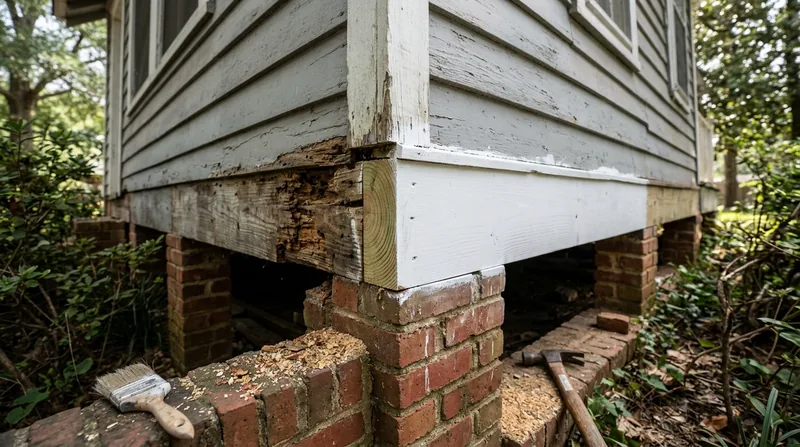
A typical example: a 1920s bungalow in Old Cloverdale with rot in the rim joist and subfloor near a kitchen sink. We open the crawlspace, cut out the decayed rim joist and subfloor, sistering new pressure-treated lumber to the remaining floor joists, and restore the rim joist connection. The job takes 2 to 4 days depending on the extent of the decay and whether other systems need attention.
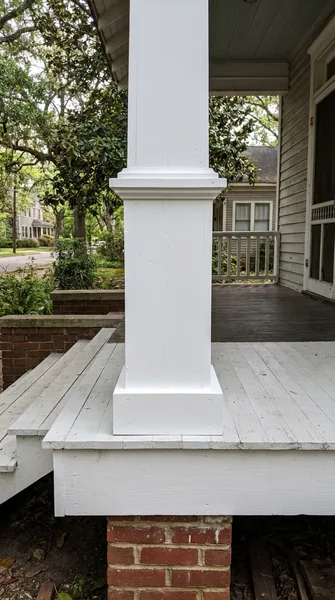
Example: A raised cottage in Capitol Heights with soft porch decking and rot in the porch stringers and support posts. We remove the decking, cut out the rotted wood, sistering new pressure-treated lumber to the stringers and replacing the posts entirely. We rebuild the decking with pressure-treated or composite lumber and restore the railings. The work is structural, not cosmetic, and prevents collapse.
For more complex structural issues, including beam replacement and load-bearing alterations, see our page on beam replacement and load-bearing wall removal. If your rot is tied to termite damage, our termite damage repair service covers structural wood replacement from a pest inspection report.
Wood Rot Repair Methods and When to Use Each
| Approach | Description | Best For |
|---|---|---|
| Sistering | Fastening a new pressure-treated joist or rafter alongside the existing member, connecting them with bolts and bearing on a common support. | Rim joists, floor joists, and rafters where the decay is localized and the remaining wood is sound. |
| Selective Cutting and Splicing | Cutting out the decayed section of a beam or joist and splicing in new pressure-treated lumber with bearing on both sides of the cut. | Beams, posts, and stringers where the decay is in the middle of a long span and the ends are sound. |
| Full Member Replacement | Removing an entire joist, beam, post, or stringer and installing new pressure-treated or rot-resistant lumber to the same size and grade. | Posts, sill plates, and joists where decay extends more than 30 percent of the length or where the member is too compromised to repair. |
| Fascia and Trim Replacement | Removing rotted fascia, soffit, or exterior trim and installing new pressure-treated, redwood, or composite material, restoring the original profile. | Fascia, soffits, rake trim, and door casings where decay is surface-level and doesn't extend into the framing behind. |
| Moisture Control and Preventive Treatment | Improving crawlspace ventilation, grading, or gutter drainage, and treating exposed framing with a wood preservative to arrest moisture and slow decay. | Preventing recurrence after repair, or addressing early-stage decay in crawlspace joists and sills before structural loss occurs. |
Wood Rot and Dry Rot Repair Cost in Montgomery: What to Expect
Wood rot and dry rot repair cost in Montgomery ranges from $650 for a small localized repair, such as a rotted section of fascia or a single joist with minor decay, to $3,000 to $6,000 or more for structural work involving multiple joists, subfloor replacement, or load-bearing posts. The price depends on the scope of the decay, the lumber species and grade needed for replacement, accessibility, and whether the work requires a permit. Getting 2 to 3 estimates from local carpenters helps you understand the range and the reasoning behind each quote.
- Small fascia or trim repair, localized to one section of the house, typically runs $650 to $1,200.
- Floor joist repair, involving sistering or partial replacement of one or two joists in a crawlspace, usually costs $1,500 to $2,500.
- Subfloor replacement over a larger area, or structural work on sill plates or rim joists, can exceed $3,000 depending on the square footage involved.
- Load-bearing post or beam replacement, especially if a permit is required, often requires a structural engineer and adds $500 to $1,500 for engineering and permitting.
Travel within Montgomery and surrounding areas is included. We provide a free estimate within 24 hours at (334) 721-7938, with no obligation to book. See our full pricing overview for additional details and service options.
Wood Rot and Dry Rot Repair Near Me: What Montgomery Homeowners Should Know When Hiring
Hiring a local carpenter for wood rot repair is a straightforward process, but it pays to ask the right questions. Look for a carpenter who explains the decay, proposes repair before replacement, and is fully insured. Request references from recent jobs, and check that the contractor understands local building codes and permit requirements. If your home is in a historic district or subject to HOA restrictions, confirm that the contractor is familiar with those requirements before work begins.
- Verify that the contractor is fully insured and can provide a current certificate of insurance upon request.
- Ask for at least two references from recent wood rot or structural carpentry jobs, and follow up with them.
- Confirm that the contractor understands whether your project requires a permit from the Montgomery building department.
- If your home is in a historic district, such as the Garden District or Old Cloverdale, ask whether the contractor has experience with historic preservation standards.
- Request a written estimate that specifies the scope of work, the lumber to be used, and the timeline for completion.
- Understand what the contractor will do to address moisture and prevent recurrence, not just replace the wood.
We can help you document the damage for an insurance claim, and we work with your pest inspector's report if termite damage is involved. Contact us for a free estimate and to discuss your project in detail.
Wood Rot & Dry Rot Repair in Montgomery: Pricing Guide
| Service | Price | Details |
|---|---|---|
| Small fascia or trim rot repair | Starting at $650 | Localized decay in one section of fascia, soffit, or exterior trim, replaced with rot-resistant material and finished to match existing profile |
| Floor joist sistering or partial replacement | Starting at $1,500 | One or two joists in crawlspace with decay, repaired by sistering new pressure-treated lumber or selective cutting and splicing |
| Subfloor or sill plate replacement | Starting at $2,500 | Larger structural repair involving multiple joists, rim joist, or sill plate replacement, including moisture control and ventilation improvements |
| Load-bearing post or beam replacement | On estimate | Structural members require on-site assessment, often a licensed structural engineer, and permit verification with Montgomery building department before pricing |
| Travel and estimate | Free | No mileage or travel fees within Montgomery and surrounding service areas; free estimate response within 24 hours at (334) 721-7938 |
Indicative pricing, the exact cost depends on square footage, finish, and site access. Free personalized estimate within 24h at (334) 721-7938.