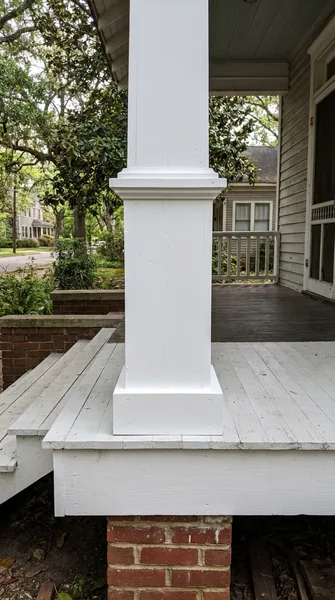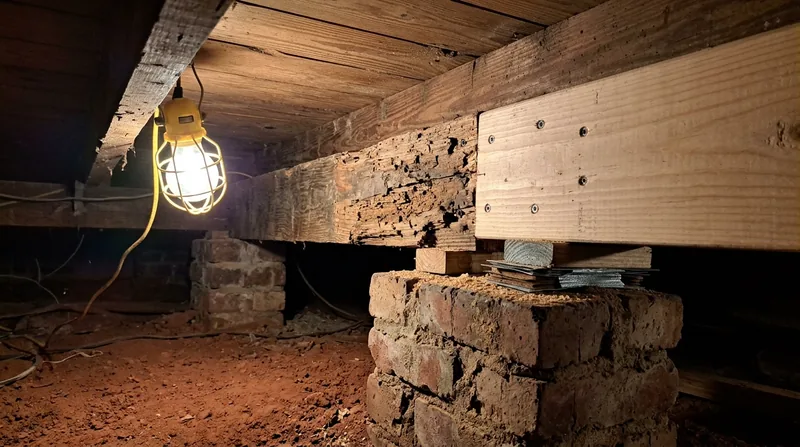




Floor joist and subfloor repair in Montgomery addresses one of the most common structural issues in the city's older housing stock. Montgomery's residential neighborhoods, from the Craftsman bungalows and Tudor cottages of the Garden District to the raised cottages around downtown and the brick ranches spreading through Dalraida and eastern subdivisions, sit on brick piers over ventilated crawlspaces or, in newer homes, on slab foundations. The hot, humid subtropical climate, heavy year-round rainfall, and the city's red-clay soils create ideal conditions for wood decay: trapped crawlspace moisture rots subfloors and floor joists, while termite pressure works into sills and rim joists. Sagging, bouncy, or soft floors that develop over time signal damage to the structural members below the finish flooring. We assess compromised joists and subfloor sections, sister or replace them as the wood justifies, and level floors before finishes go back down.
Why Floor Joist and Subfloor Repair Matters in Montgomery's Older Homes
Montgomery's brick-pier foundation system, common in homes built before the 1960s, depends entirely on sound floor framing to distribute loads. When joists soften from moisture or termite damage, the floor loses its structural integrity. The problem compounds over time: a sagging floor allows water to pool in low spots, accelerating rot in adjacent members. Addressing damaged joists and subfloor early prevents the cascade of repairs that come when failure spreads into the rim joist, sill plate, or the brick piers themselves.
- Termite-damaged joists lose load capacity and require sistering or replacement to restore structural support.
- Moisture-rotted subfloor sections create soft spots and allow water to accumulate in the crawlspace, feeding further decay.
- Sagging floors often indicate multiple joists are compromised, requiring a systematic assessment to determine repair scope.
- Leveling the floor after joist repair prevents new plumbing and electrical lines from draining into low spots and restores proper slope for finish materials.
Catching these issues early keeps repair costs down and prevents structural settlement that affects interior finishes and door operation throughout the home.
Key info: Montgomery's red-clay soils shift seasonally with moisture content, working on brick piers and creating uneven settlement. Combined with crawlspace moisture and termite pressure, this makes floor joist and subfloor repair a routine structural maintenance item in homes older than 40 years. For detailed guidance on assessing structural damage, the City of Montgomery Building Department publishes inspection standards and permit requirements for residential structural work.
How We Repair Floor Joists and Subfloor in Montgomery
Our approach begins with a thorough crawlspace inspection to identify which members are compromised and why. We probe suspect wood with a sharp tool to assess rot depth, check for active termite damage, and measure deflection in the floor above. Once we understand the scope, we determine whether sistering (bolting a new joist alongside the damaged one) or full replacement makes sense. Sistering works when the existing joist retains at least half its structural depth and the damage is localized. Full replacement is necessary when rot extends the length of the member or when termite damage has created voids that undermine load capacity. After joist work is complete, we rebuild subfloor sections using pressure-treated lumber or solid-sawn Douglas fir, then shim and level the new structure before finish flooring goes back down. See our termite damage repair page for details on how we work from your pest inspection report.
- We inspect the crawlspace, probe suspect joists and subfloor, and photograph damage to document the scope for insurance or permit purposes.
- We determine whether sistering or replacement is appropriate based on rot depth, remaining structural capacity, and the extent of damage along each member.
- We install sister joists with bolted connections every 16 inches, or remove and replace compromised members entirely with new dimensional lumber sized to match the original.
- We rebuild subfloor sections, ensuring proper nailing patterns and adequate bearing on the new joist structure.
- We shim and level the new floor to remove sag and establish proper slope for finish flooring and drainage.
The result is a floor that no longer bounces, supports furnishings and occupants safely, and sheds water away from the crawlspace.
Real example: A 1920s bungalow in the Garden District had a soft spot in the master bedroom floor that had worsened over two years. Inspection revealed three joists with wet rot in the crawlspace directly below, caused by a slow gutter leak on the exterior wall above. We sistered all three joists with 2x8 pressure-treated lumber, bolted at 16-inch centers, rebuilt the subfloor, and leveled the floor. The homeowner also corrected the gutter. Total time: three days. The floor is now solid and level.
| Approach | Description | Best for |
|---|---|---|
| Sistering | Installing a new joist bolted alongside the damaged one, sharing the load. | Localized rot or termite damage where the existing joist retains adequate depth and the damage does not extend the full length of the member. |
| Full Replacement | Removing the compromised joist entirely and installing new dimensional lumber of matching size and grade. | Extensive rot, termite galleries, or damage along the full length of the member that undermines structural capacity. |
| Subfloor Patching | Cutting out rotted or soft subfloor sections and installing new pressure-treated or solid-sawn lumber with proper nailing. | Isolated soft spots or rot in subfloor that do not span the full width or length of the joist bay. |
| Full Subfloor Replacement | Removing all compromised subfloor in a section and installing new decking across multiple joist bays. | Widespread rot, moisture damage, or termite activity affecting large areas of the crawlspace. |
| Leveling and Shimming | Using shims or self-leveling materials to restore proper floor plane and drainage slope after joist repair. | All floor joist repairs, to ensure finish flooring sits flat and water drains away from the crawlspace. |
Floor Joist and Subfloor Repair Cost in Montgomery: What to Expect
Floor joist and subfloor repair in Montgomery typically starts at $1,800 for a localized repair involving one to two joists and a small subfloor patch. The actual cost depends on how many members are compromised, how much subfloor needs replacement, whether the crawlspace is accessible, and whether sistering or full replacement is required. A home with three to five damaged joists and moderate subfloor rot in a single room often runs $3,500 to $5,500. Extensive damage affecting an entire section of the crawlspace, or a home with multiple problem areas, can reach $7,000 to $12,000 or more. The best way to understand the scope and cost for your home is to get a free estimate from us. We'll inspect your crawlspace, assess the damage, and give you a clear picture of what needs to happen and what it will cost. See our full pricing overview for more detail on how we structure estimates for structural work.
Factors that move the cost up include the number of joists affected, the length of rot along each member, how much subfloor requires replacement, whether the crawlspace is tight or flooded, and whether we need to work around existing plumbing or electrical lines. A home on a slab foundation with a localized subfloor issue costs less than a pier-and-beam home with widespread crawlspace moisture and multiple damaged members. Getting two or three estimates from local carpenters who will inspect your crawlspace in person is always smart: phone estimates and online quotes for structural work are guesses, not pricing.
We offer a free, no-obligation estimate within 24 hours. Call us at (334) 721-7938 to schedule your crawlspace inspection.
Floor Joist and Subfloor Repair Near Me: What to Look for When Hiring a Carpentry Contractor in Montgomery
Finding a carpenter who understands floor joist repair and will spend time in your crawlspace diagnosing the problem is more important than finding the lowest price. A good contractor will explain what they see, show you the damage, and tell you honestly whether sistering or replacement makes sense for each joist. They will also explain why subfloor is soft or rotted, and whether the root cause is moisture, termites, or poor drainage. Ask for references from recent structural repair jobs, not just finish carpentry work. Check that the contractor is fully insured and can show you a certificate of insurance covering general liability and workers compensation. If your home is in a historic district or an HOA community, ask whether permits are required for structural work in your area. Your local building department can tell you the rules. Get estimates from at least two contractors who will inspect your crawlspace in person. Avoid anyone who quotes a price without seeing the damage or who promises to eliminate a termite infestation (that is a separate licensed trade). When you are ready to move forward, contact us for a free estimate or call (334) 721-7938.
- Confirm that your contractor is fully insured and can provide proof of general liability and workers compensation coverage before work begins.
- Ask for references from structural carpentry jobs completed in the past two years, not just cosmetic or finish work.
- Request an in-person crawlspace inspection and a written estimate that describes which joists are damaged, what repair method is proposed, and why.
- Check with your local building department or HOA to understand whether permits are required for floor joist replacement or subfloor work in your neighborhood.
- Avoid contractors who claim they can treat or eliminate termite infestations, or who pressure you into replacement when sistering would be adequate repair.
A solid floor is the foundation of a safe, comfortable home. Taking time to hire the right carpenter pays off in a repair that lasts and an explanation you can trust.
Floor Joist & Subfloor Repair in Montgomery: Pricing Guide
| Service | Price | Details |
|---|---|---|
| Single joist sistering and subfloor patch | Starting at $1,800 | One to two joists sistered, localized subfloor repair, includes crawlspace inspection and floor leveling |
| Multiple joist sistering or replacement | Starting at $3,500 | Three to five compromised joists, moderate subfloor damage, one room or bay, sistering or replacement determined on site |
| Extensive structural repair | Starting at $7,000 | Widespread crawlspace damage, multiple joists, large subfloor sections, or combination of moisture and termite damage requiring assessment |
| Complex or large-scale job | On estimate | Entire crawlspace replacement, multiple problem areas, or homes with slab or unusual foundation systems require on-site inspection before pricing |
| Travel and inspection | Included | No separate charge for travel in Montgomery and surrounding service areas, crawlspace inspection included in estimate |
| Free estimate | Free | No-obligation crawlspace inspection and written estimate within 24 hours, call (334) 721-7938 to schedule |
Indicative pricing, the exact cost depends on square footage, finish, and site access. Free personalized estimate within 24h at (334) 721-7938.