Dry Rot vs Termite Damage: Understanding the Enemy
If you own a home in Montgomery, chances are you've worried about wood damage at some point. Two of the most common culprits are dry rot and termite damage, yet they're fundamentally different problems requiring different solutions. Many homeowners confuse the two because both compromise wood integrity and can lead to serious structural issues if left untreated. Understanding which threat you're facing is the first step toward protecting your investment.
Dry rot is a fungal disease that thrives in damp conditions, breaking down the cellulose in wood and leaving it brittle and crumbly. Termites, on the other hand, are wood-eating insects that tunnel through timber as they feed. While both can devastate a home's structural integrity, the damage patterns, treatment approaches, and urgency differ significantly. Getting the diagnosis right means you'll invest your resources wisely and address the root cause rather than just the symptoms.
What Does Wood Rot Look Like: Visual Signs of Dry Rot
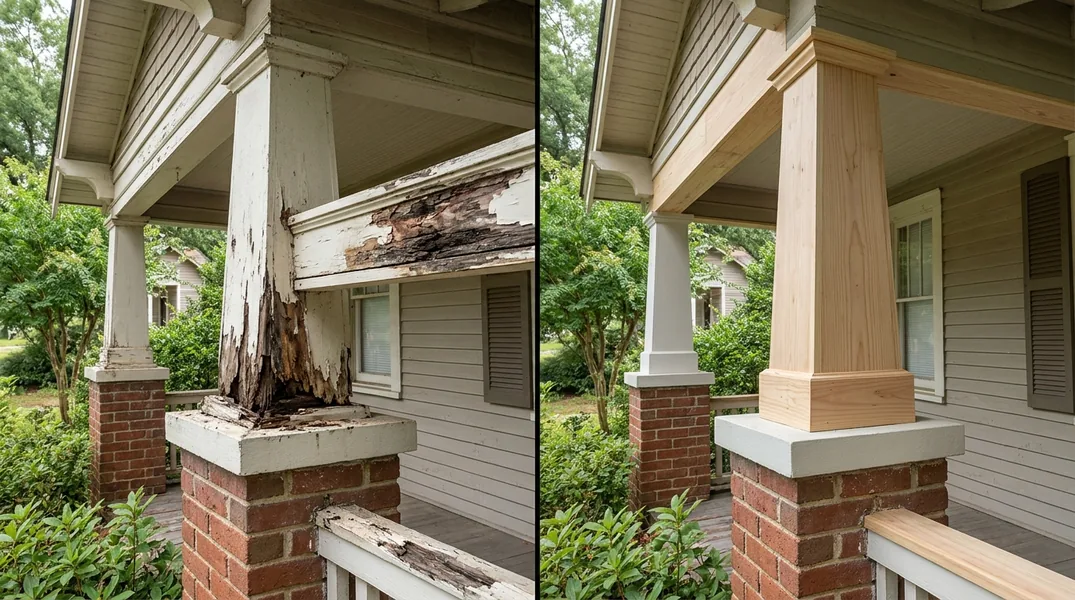
One of the clearest ways to identify dry rot is by its appearance. Dry-rotted wood typically becomes discolored, turning dark brown or grayish in color. The wood surface may develop deep cracks that form a distinctive cube-like pattern, which is why dry rot is sometimes called 'cubical rot.' When you touch affected wood, it feels soft and crumbly, almost like compressed cardboard. In advanced cases, the wood can be crushed easily by hand, which is a telltale sign that the fungal decay has progressed significantly.
Another visual indicator of dry rot is the presence of fungal fruiting bodies, which appear as flat, pancake-like growths on the wood surface. These fruiting bodies are typically white, gray, or reddish in color and release spores that spread the infection. You might also notice fine, hair-like strands called mycelium running across the wood or through the air spaces in your home. If you spot these signs in your Montgomery home, particularly in basements, crawl spaces, or around plumbing areas, it's time to call a professional for Wood Rot & Dry Rot Repair.
Signs of Termite Damage in Wood: What to Look For
Termite damage presents very differently from dry rot, and recognizing these distinctions can help you act quickly. Unlike the crumbly, discolored appearance of dry rot, termite-damaged wood often looks relatively normal on the surface while being hollowed out underneath. Termites eat wood from the inside out, creating galleries or tunnels that weaken the structure while leaving a thin outer shell intact. If you tap on infested wood, it may sound hollow or papery. You might also notice small piles of sawdust-like material called frass, which is actually termite droppings, accumulating near damaged wood or at the base of walls.
Another key sign of termite activity is the presence of mud tubes. Subterranean termites, which are common in the Southeast, build these pencil-thin tubes from soil to wood to maintain moisture as they travel. You'll often find these tubes running up foundation walls, along basement joists, or inside crawl spaces. Additionally, termites may leave behind discarded wings near entry points or window sills, as swarmers shed their wings after finding a mate. If you discover any of these signs, you need prompt Termite Damage Repair to prevent catastrophic structural failure.
Key Differences: How Dry Rot and Termite Damage Differ
Understanding the fundamental differences between dry rot and termite damage helps you respond appropriately. Dry rot is a biological process caused by fungi that requires moisture to thrive. The damage progresses through spore dispersal and fungal growth, and it typically affects localized areas where moisture is concentrated. Termite damage, conversely, is caused by living insects actively feeding on wood. Termites can spread rapidly across your home and don't require the same moisture levels as dry rot fungi. A termite colony can consume significant amounts of wood in a relatively short time, whereas dry rot progresses more slowly but can still cause severe structural compromise if ignored.
The moisture requirement is another crucial distinction. Dry rot thrives in damp environments with poor ventilation, making basements, crawl spaces, and areas around leaking pipes particularly vulnerable. Termites, while preferring some moisture, can survive in drier conditions and will tunnel deep into wood seeking cellulose. This means termites can damage structural elements throughout your entire home, not just the damp zones. Additionally, dry rot treatment focuses on eliminating moisture and removing affected wood, while termite treatment requires pest control intervention followed by structural repairs. Misidentifying the problem could lead you down the wrong treatment path, wasting time and money.
Wood Rot & Dry Rot Repair Near Me: When to Call a Professional
If you suspect either dry rot or termite damage in your home, professional assessment is essential. DIY repairs might seem cost-effective initially, but improper diagnosis and treatment can allow the problem to spread unchecked. A qualified carpenter from Montgomery Carpentry can inspect your home, identify the specific type of damage, and recommend the appropriate course of action. We'll determine whether you need Wood Rot & Dry Rot Repair, Termite Damage Repair, or specialized work like Floor Joist & Subfloor Repair depending on where the damage is located.
Don't wait until the damage becomes catastrophic. Early intervention saves you money and prevents safety hazards. If you're in Montgomery and concerned about wood damage, contact Montgomery Carpentry at (334) 721-7938 for a free estimate. We'll assess the situation thoroughly and provide you with clear, honest guidance about what needs to be done. Structural integrity is not something to compromise on, and professional expertise ensures your repairs are done right the first time.
Prevention and Next Steps: Protecting Your Montgomery Home
Preventing both dry rot and termite damage starts with good home maintenance practices. Keep moisture levels in check by ensuring proper ventilation in crawl spaces and basements, fixing leaks promptly, and directing water away from your foundation. Reduce wood-to-soil contact by maintaining clearance between your home's wooden elements and the ground. Regular inspections, especially in older homes or those with a history of moisture issues, can catch problems early before they become expensive repairs.
If you've identified potential damage or simply want peace of mind, reaching out to Montgomery Carpentry is your next smart move. We serve the entire Montgomery area and have extensive experience with both dry rot and termite damage restoration. Whether you need assessment, repair, or preventive consultation, our team is ready to help. Call us at (334) 721-7938 or visit our website to request your free estimate today. Your home's structural health is too important to leave to guesswork.
Looking for a professional carpentry contractor in Montgomery? Montgomery Carpentry responds fast for all your carpentry needs.
Get a Free QuoteOur services: Wood Rot & Dry Rot Repair · Termite Damage Repair · Floor Joist & Subfloor Repair