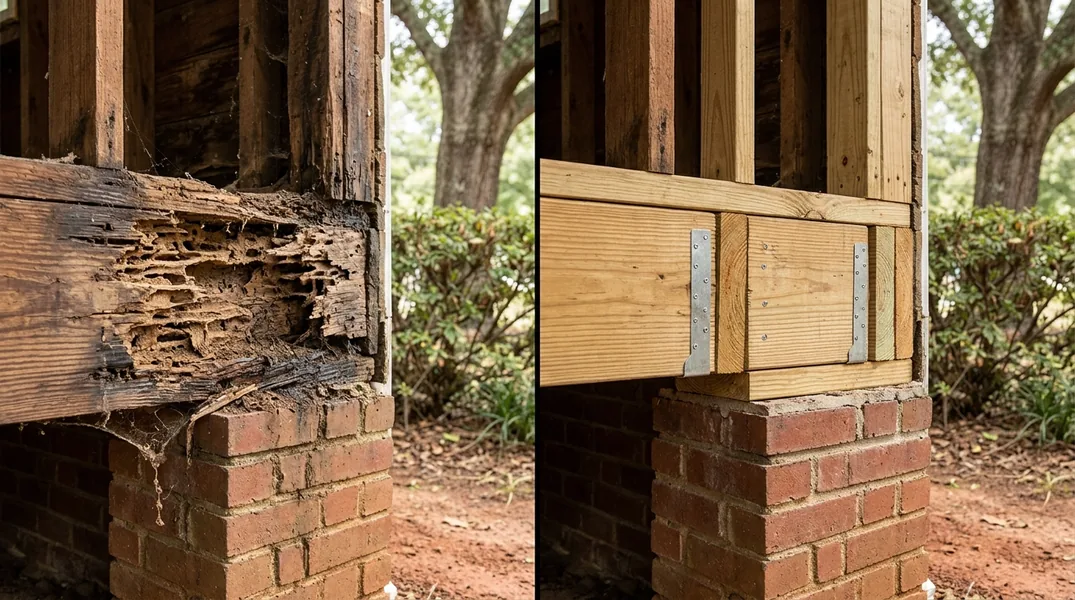
Is Termite Damage Covered by Homeowners Insurance?
One of the most common questions homeowners in Montgomery ask us is whether their homeowners insurance will cover termite damage. The short answer is almost always no. Most standard homeowners insurance policies explicitly exclude damage caused by termites, carpenter ants, and other wood-destroying insects. This exclusion exists because termite damage is considered a maintenance issue rather than a sudden, accidental loss, which is what homeowners insurance is designed to cover.
Understanding this limitation is crucial for homeowners who want to protect their investment. While your policy may cover sudden events like fire or storms, the slow, persistent damage caused by termites over months or years falls outside typical coverage. Insurance companies view termite infestations as preventable through proper home maintenance and regular inspections. This means you cannot rely on your homeowners insurance to pay for Termite Damage Repair when an infestation is discovered. Instead, you'll need to budget for these repairs out of pocket or explore other financial options.
Why Insurance Companies Exclude Termite Damage
Insurance exclusions for termite damage aren't arbitrary. They exist because termite infestations develop gradually over extended periods, giving homeowners time to detect and address the problem through preventive measures. Unlike a tree falling on your roof during a storm, termite damage doesn't happen suddenly or unexpectedly. Insurance companies argue that homeowners have a responsibility to maintain their properties and conduct regular inspections to catch infestations early, before they cause extensive structural damage.
Additionally, the cost of termite damage can be staggering. Once termites establish colonies in a home's foundation, walls, or wooden support structures, the repair bills can reach tens of thousands of dollars. If insurance companies covered termite damage, premiums would skyrocket for all homeowners, even those who never experience an infestation. By excluding this coverage, insurers keep premiums affordable for the general population while placing the responsibility on individual homeowners to prevent infestations through regular inspections and preventive treatments.
What About Wood Rot and Dry Rot Insurance Claims?
Homeowners sometimes confuse termite damage with Wood Rot & Dry Rot Repair needs, and the insurance coverage differs depending on the cause. If your wood rot resulted from a covered event, such as a roof leak caused by a storm, your insurance may cover the damage. However, if the rot developed due to poor maintenance, inadequate ventilation, or chronic moisture problems, it will likely be denied as a maintenance issue.
The key distinction is causation. Insurance adjusters will investigate how the wood rot developed. If they determine that you failed to maintain your home properly or ignored obvious signs of water intrusion, they'll classify it as a maintenance claim and deny coverage. In Montgomery, where humidity levels can be high, wood rot is a common problem that often results from poor drainage, missing gutters, or inadequate ventilation. These are all maintenance issues that fall outside insurance coverage. If you suspect wood rot in your home, getting a professional assessment quickly is important, as delaying repairs can worsen the damage and make any potential insurance claim more difficult to substantiate.
What Your Homeowners Insurance Actually Covers
While termite damage itself isn't covered, your homeowners insurance may cover damage that results from a covered peril. For example, if termites weaken a structural beam and that beam subsequently fails during a storm, causing your roof to collapse, the roof damage might be covered as storm damage. However, the underlying termite damage that created the vulnerability would not be covered. This distinction is important and often leads to disputes between homeowners and insurance companies.
Most homeowners insurance policies cover sudden and accidental damage from named perils like fire, lightning, theft, and severe weather. They also typically cover liability if someone is injured on your property. What they don't cover is gradual deterioration, pest damage, lack of maintenance, or damage from any pest infestation. If you're concerned about coverage for a specific situation, contact your insurance agent directly and ask them to review your policy. They can clarify exactly what is and isn't covered in your particular plan. It's always better to understand your coverage before you need it, rather than discovering gaps when filing a claim.
How to Protect Your Home and Budget for Repairs
Since you can't rely on insurance to cover termite or wood rot damage, the best strategy is prevention and early detection. Schedule regular professional inspections at least once per year, especially if your home is older or located in an area prone to termite activity. Early detection of an infestation can save you thousands of dollars in repair costs. Many pest control companies offer preventive treatments that create a barrier around your home's foundation, reducing the risk of termite colonies establishing themselves in your structure.
Beyond pest prevention, maintain your home's exterior to prevent moisture problems that lead to wood rot. Keep gutters clean and functioning properly, ensure downspouts direct water away from your foundation, repair roof leaks promptly, and maintain proper ventilation in crawl spaces and attics. These simple maintenance steps can prevent many of the conditions that lead to expensive wood rot repairs. If you do discover damage, don't delay. The sooner you address termite or wood rot issues, the less structural damage will occur. Montgomery Carpentry specializes in both Termite Damage Repair and wood rot restoration, and our team can assess the extent of damage and provide a realistic repair plan.
Getting a Professional Assessment and Repair Estimate
If you've discovered termite damage or wood rot in your home, the first step is getting a professional evaluation. A qualified carpenter or pest damage specialist can determine the extent of the damage, identify whether the infestation is still active, and recommend the best repair approach. Some damage may be superficial and relatively inexpensive to fix, while other situations may require structural repairs like Floor Joist & Subfloor Repair or even Beam Replacement & Load-Bearing Wall Removal. Understanding the full scope of the problem helps you plan financially and make informed decisions about repairs.
Montgomery Carpentry offers free estimates for homeowners who suspect structural damage from termites or wood rot. During an inspection, our team will document the damage, explain what caused it, and provide transparent pricing for repairs. We can also help you understand whether any portion of the damage might be covered by insurance, though we always recommend discussing your specific situation with your insurance agent as well. If you're concerned about termite or wood rot damage in your home, don't wait. Contact us today at (334) 721-7938 to schedule your free estimate and get peace of mind about your home's structural integrity.
Looking for a professional carpentry contractor in Montgomery? Montgomery Carpentry responds fast for all your carpentry needs.
Get a Free QuoteOur services: Wood Rot & Dry Rot Repair · Termite Damage Repair · Floor Joist & Subfloor Repair