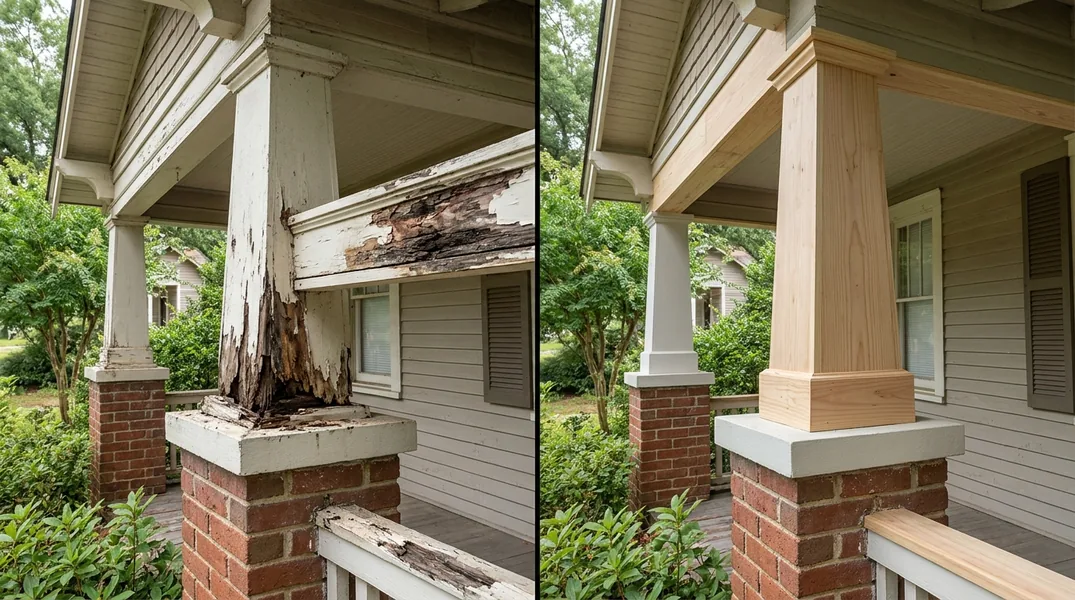
Why Historic Homes in Montgomery Demand Different Wood Care
If you own a craftsman bungalow in the Garden District or a charming cottage in Old Cloverdale, you already know that historic homes are special. They carry character, craftsmanship, and stories that modern construction simply cannot replicate. But that beauty comes with responsibility. The wood framing, siding, and structural elements in homes built in the early 1900s face challenges that newer properties rarely encounter.
The primary issue is age. After a century or more, the wood in your home has weathered countless seasons of Montgomery's humid subtropical climate. Wood naturally absorbs and releases moisture, and in our region's warm, damp conditions, that cycle accelerates deterioration. Unlike modern pressure-treated lumber, the old-growth wood used in historic homes was often left unfinished or finished with products that no longer provide adequate protection. Understanding these vulnerabilities is the first step toward protecting your investment.
Historic homes also tend to have unique architectural details that require specialized knowledge to repair correctly. A poorly executed fix can compromise both the structural integrity and the historical authenticity of your property. This is why working with carpenters who understand both old construction methods and modern repair standards is essential for any Montgomery homeowner with a period property.
Recognizing Wood Rot and Dry Rot in Your Historic Home
Wood rot comes in two main forms, and both are common in older homes. Wet rot develops when wood remains damp for extended periods, typically from roof leaks, foundation seepage, or poor drainage. Dry rot, despite its name, also requires moisture to develop, but it can spread through wood even after the initial moisture source is gone. Both types weaken the structural integrity of framing, beams, and siding, and both require professional attention to prevent catastrophic failure.
The signs of trouble are often subtle at first. You might notice soft spots when you press on exterior wood siding, or a slightly spongy feeling underfoot in certain rooms. Paint may bubble or peel more aggressively than normal. You might detect a musty odor in the basement or crawl space. Small holes or tunnels in wood, especially near the foundation, can indicate Termite Damage Repair rather than rot, but the end result is similar: weakened wood that needs immediate evaluation. If you spot any of these warning signs, a professional inspection is your best defense against expensive damage down the road.
The challenge with historic homes is that damage often hides behind original plaster, period siding, or decorative trim. By the time you see visible signs on the interior, the problem may have progressed significantly behind the walls. This is why regular inspections, especially after heavy rain or seasonal changes, are so valuable for bungalow and cottage owners in our area.
Wood Siding Repair: Preserving Character While Ensuring Protection
Wood siding repair on a historic home is far more than a cosmetic issue. The exterior wood envelope is your home's first line of defense against weather, pests, and moisture infiltration. In older homes, original siding was often installed over solid wood sheathing without a modern moisture barrier. This means that water intrusion can travel directly into the framing behind the siding, causing rot to develop deep within the wall structure where you cannot see it.
When repairing historic wood siding, the goal is to replace only the damaged portions while maintaining the original profile, dimensions, and finish where possible. This requires skilled carpenters who understand period construction and have access to materials that match. A hastily patched siding repair using modern materials can actually accelerate decay in adjacent original wood by creating moisture traps and incompatible expansion rates.
Proper siding repair also involves addressing the root cause of the damage. Is water running behind the siding due to failed caulking or flashing? Is the ground too close to the siding, wicking moisture up from the soil? Are gutters and downspouts directing water away from the foundation? A comprehensive repair considers all these factors, not just replacing the visible damage. This is why getting a free estimate from experienced craftsmen is important before any work begins.
Foundation and Floor Issues: When Rot Reaches the Structural Core
Many historic cottages and bungalows were built on shallow foundations or piers, with wood floor joists resting directly on brick or stone. Over decades, moisture wicks up from the ground, and if ventilation is poor, the conditions become perfect for wood decay. Floor Joist & Subfloor Repair is one of the most common and serious repairs needed in older homes because compromised floor framing can affect the entire structure's stability.
You might notice sagging floors, soft spots, or an uneven surface when walking through rooms. Doors that no longer close properly or windows that stick can also signal foundation settlement or joist deterioration. These symptoms should never be ignored. A professional inspection can determine whether the issue is cosmetic settling or active structural decay requiring immediate intervention.
Repairing floor joists in a historic home requires careful planning. Modern repair methods might involve installing new pressure-treated lumber alongside original wood, sistering beams, or in severe cases, partial Beam Replacement & Load-Bearing Wall Removal. The key is ensuring that repairs are structurally sound while respecting the home's original construction methods where possible. This specialized work is why many homeowners in Montgomery call professional carpenters rather than attempting DIY solutions.
Historic Home Maintenance Montgomery: Prevention as Your Best Tool
The most cost-effective maintenance strategy for any historic property is prevention. Regular inspections, prompt repairs of minor issues, and attention to moisture management will extend the life of your home's wood components significantly. This means checking your roof annually for missing shingles or deteriorated flashing, cleaning gutters before and after heavy rain seasons, and ensuring that downspouts direct water at least four to six feet away from the foundation.
Interior maintenance matters too. Maintain consistent humidity levels, especially in basements and crawl spaces. Ensure that bathrooms and kitchens have proper ventilation. Address plumbing leaks immediately, as even small drips can lead to major wood damage over time. Paint and seal exterior wood on a regular schedule, typically every five to seven years for older homes in our humid climate. These simple steps prevent the conditions that allow rot and decay to take hold.
For homeowners who want expert guidance on maintaining their specific property, a professional assessment is invaluable. Experienced carpenters can identify vulnerabilities unique to your home's age, construction method, and location, then recommend a prioritized maintenance plan. If you are ready to protect your investment, contact Montgomery Carpentry at (334) 721-7938 to schedule your consultation.
Wood Rot & Dry Rot Repair Cost in Montgomery: What to Budget
The cost of wood rot and dry rot repairs varies widely depending on the extent of damage, the location of the affected wood, and the materials required. A small area of siding rot might cost a few hundred dollars to repair, while structural issues affecting floor joists or load-bearing beams can run into thousands. The key to understanding pricing is recognizing that the cheapest repair option is often not the best investment for a historic home.
When you receive quotes for Wood Rot & Dry Rot Repair, make sure contractors are providing detailed assessments of the damage, not just surface-level estimates. A thorough evaluation should identify not just the visible rot but also any hidden damage behind walls or under flooring. It should address the moisture source that caused the problem. Quality repairs may cost more upfront but will last decades and protect your home's value far better than quick fixes.
Budget considerations should also include preventive maintenance. The cost of annual inspections and routine maintenance is minimal compared to the expense of major structural repairs. For a clear understanding of what your specific situation will cost, reach out to Montgomery Carpentry for a detailed assessment. We serve homeowners throughout Montgomery and can provide transparent pricing based on your home's actual needs.
Looking for a professional carpentry contractor in Montgomery? Montgomery Carpentry responds fast for all your carpentry needs.
Get a Free QuoteOur services: Wood Rot & Dry Rot Repair · Termite Damage Repair · Floor Joist & Subfloor Repair