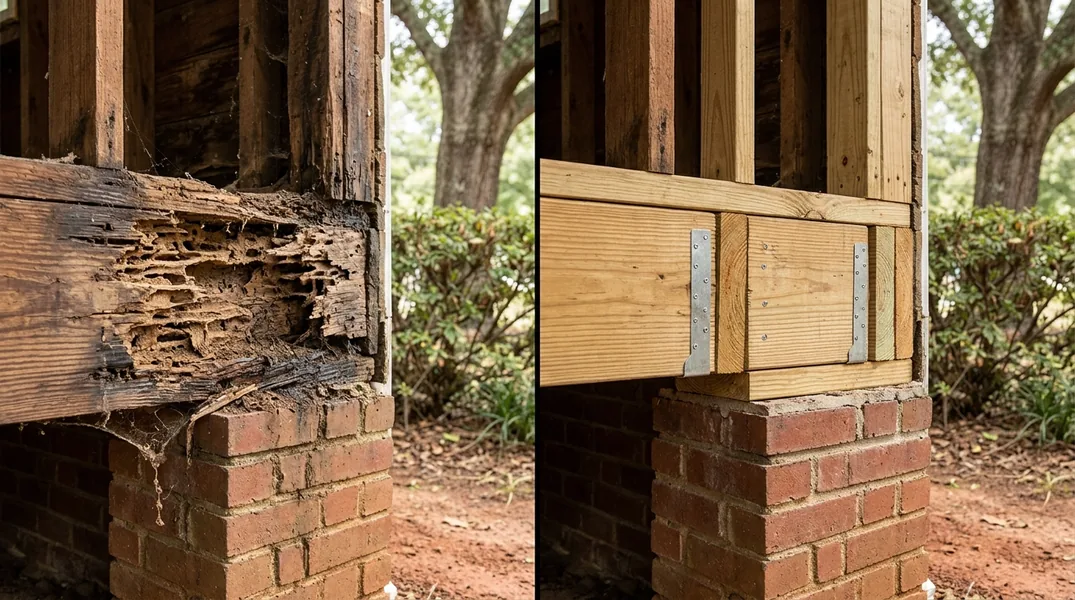
Understanding Wood Rot vs. Termite Damage
When you discover soft, discolored wood on your home's exterior or foundation, the first question is usually: can this be saved, or does it need to come out entirely? The answer depends on several factors, starting with what caused the damage in the first place.
Wood rot and termite damage are two distinct problems that often get confused. Wood rot occurs when moisture penetrates wood fibers, allowing fungi to break down the cellulose and lignin that hold the wood together. This process is slow but relentless, especially in humid climates like Montgomery where moisture levels stay high year-round. Termite damage, by contrast, is caused by wood-eating insects that tunnel through the wood, leaving galleries and weakening its structural integrity. While both compromise the wood's strength, the repair approach differs significantly.
Identifying which problem you're facing is your first step toward a solution. Rotted wood typically feels spongy or crumbly when you press on it, and you may notice a musty odor nearby. Termite damage often leaves a honeycomb pattern inside the wood, and you might spot mud tubes running along foundation walls or hear hollow sounds when tapping the wood. If you're unsure, a professional inspection can clarify the situation before you make any decisions about repair versus replacement.
When Repair is Possible: Signs Your Wood Can Be Saved
The good news is that not all wood rot requires complete replacement. If the damage is caught early and remains superficial, Wood Rot & Dry Rot Repair can restore the wood without removing it entirely. This approach preserves the original structure, maintains the aesthetic appeal of your home, and costs significantly less than full replacement.
Repair is typically viable when rot or termite damage affects only the outer layers of wood. For example, if your wooden siding shows surface-level softness but the inner core remains solid, a skilled carpenter can remove the compromised portion, treat the area with a wood hardener, and apply a protective sealant. Similarly, if Termite Damage Repair has created small galleries in a beam but the beam's overall structural capacity is intact, reinforcement and localized repairs may be sufficient. The key is that the remaining wood must still be strong enough to carry its load and resist future moisture intrusion.
Homeowners in Prattville and surrounding areas often benefit from early detection programs that catch rot before it becomes widespread. If you notice soft spots, discoloration, or a musty smell near your foundation, siding, or roof overhangs, scheduling an inspection promptly can mean the difference between a focused repair and a costly replacement.
When Replacement is Necessary: Structural Integrity Concerns
There are situations where repair simply isn't safe or practical. When wood rot or termite damage has penetrated deep into structural members like floor joists, beams, or load-bearing walls, replacement becomes essential. Structural components must maintain their full strength to support the weight of your home, and compromised wood cannot reliably do that. Attempting to patch or seal damaged structural wood is a false economy that puts your home and family at risk.
If you're dealing with significant Floor Joist & Subfloor Repair needs, the damage often extends deeper than surface inspection reveals. Subfloors and joists are hidden from view, and by the time you notice sagging floors or soft spots, the decay may have spread extensively. In these cases, removing and replacing the affected sections is the only way to restore structural safety and prevent further deterioration. The same principle applies to Beam Replacement & Load-Bearing Wall Removal situations, where compromised beams must be fully replaced to maintain the integrity of your home's frame.
Additionally, if rot or termite damage covers more than about 30 percent of a single board or structural member, repair becomes impractical. The cost and complexity of reinforcing that much damaged wood often exceeds the cost of replacement. A professional assessment will help you understand whether your situation calls for targeted repair or full replacement of affected sections.
Wood Rot & Dry Rot Repair Cost in Montgomery: What to Budget
Cost is understandably a major factor in the repair versus replace decision. Understanding realistic pricing helps you make an informed choice and avoid sticker shock. Repair costs vary widely based on the extent of damage, the type of wood involved, and whether the affected area is easily accessible.
For localized wood rot repair, homeowners can typically expect to pay between $500 and $2,500 per affected area, depending on size and severity. A small section of rotted siding or soffit might fall on the lower end, while extensive rot affecting multiple boards or a larger section could approach the higher range. Termite damage repairs follow a similar pattern, though the cost can increase if the damage is widespread or located in hard-to-reach areas like crawl spaces or attics.
Full replacement of structural components like floor joists or beams is considerably more expensive, often ranging from $3,000 to $15,000 or more depending on the scope. However, delaying replacement of truly compromised structural wood can lead to exponentially higher costs down the road, as the damage spreads and additional systems become affected. The best approach is to get a professional inspection and detailed estimate. Montgomery Carpentry offers a free estimate so you can understand your options and costs before making a decision. Call (334) 721-7938 to schedule yours today.
The Repair Process: What to Expect
If repair is the right choice for your situation, understanding the process helps you prepare and set realistic expectations. The first step is always a thorough inspection to determine the full extent of damage. This may involve removing siding, probing with tools, or using moisture meters to assess how deep the problem goes. A professional carpenter will identify not only the visible damage but also any hidden decay that might compromise the repair's longevity.
Once the damage is fully assessed, the repair process typically involves removing the compromised wood, treating the remaining wood to prevent future decay, and installing new wood or reinforcement as needed. For surface rot, this might mean removing just the outer inch or two of a board and applying a wood hardener and sealant. For deeper damage, the carpenter may need to remove an entire board or section and replace it with new, pressure-treated lumber that matches the original as closely as possible. Throughout the process, addressing the moisture source is critical. If water intrusion caused the rot, that problem must be fixed, or the rot will simply return.
The timeline for repair varies based on complexity. A small siding repair might take a single day, while more involved work affecting multiple boards or structural areas could take several days. Your carpenter will provide a clear timeline and explain any temporary protective measures that may be needed during the work.
Preventing Future Rot and Termite Damage: Maintenance Tips
Whether you choose repair or replacement, prevention should be your priority going forward. Wood rot and termite damage are largely preventable through consistent maintenance and moisture management. Start by ensuring that water drains away from your home's foundation and that gutters and downspouts are clean and functioning properly. Water pooling near your foundation or running down your exterior walls creates the perfect environment for rot to develop.
Regular inspection of vulnerable areas is equally important. Check your roof for missing or damaged shingles, inspect siding for cracks or gaps, and look for signs of moisture intrusion around windows and doors. Seal any gaps with caulk or weatherstripping, and consider applying a water-repellent sealant to exterior wood surfaces every few years. Keep wood mulch and landscaping materials at least a foot away from your home's foundation, as these can trap moisture and attract termites.
For termite prevention specifically, annual inspections by a professional pest control service can catch infestations early before they cause significant damage. If you live in Montgomery or nearby areas, the warm, humid climate makes termite prevention especially important. Proper ventilation in crawl spaces and attics also reduces moisture levels that attract both wood-eating insects and fungal decay. When you invest in repair or replacement now, protecting that investment through preventive maintenance makes financial sense.
Getting Professional Help: Your Next Steps
The repair versus replace decision is too important to make alone. Every situation is unique, and what works for one homeowner may not be appropriate for another. A professional assessment from an experienced carpenter gives you the information you need to make the right choice for your home and budget.
Montgomery Carpentry specializes in wood rot and termite damage evaluation and repair throughout the area. Our team has helped hundreds of homeowners understand their options and restore their homes to safety and functionality. We provide honest, detailed assessments without pressure to over-repair or over-replace. Whether your situation calls for targeted repair or comprehensive replacement, we'll explain the options, discuss the costs, and recommend the best path forward.
Don't let wood rot or termite damage worsen while you deliberate. The longer you wait, the more extensive and expensive the problem becomes. Contact Montgomery Carpentry today for a free estimate and professional guidance. Call (334) 721-7938 or visit our website at https://montgomery-carpentry.com to schedule your inspection. We're ready to help you make the right decision and restore your home to solid condition.
Looking for a professional carpentry contractor in Montgomery? Montgomery Carpentry responds fast for all your carpentry needs.
Get a Free QuoteOur services: Wood Rot & Dry Rot Repair · Termite Damage Repair · Floor Joist & Subfloor Repair