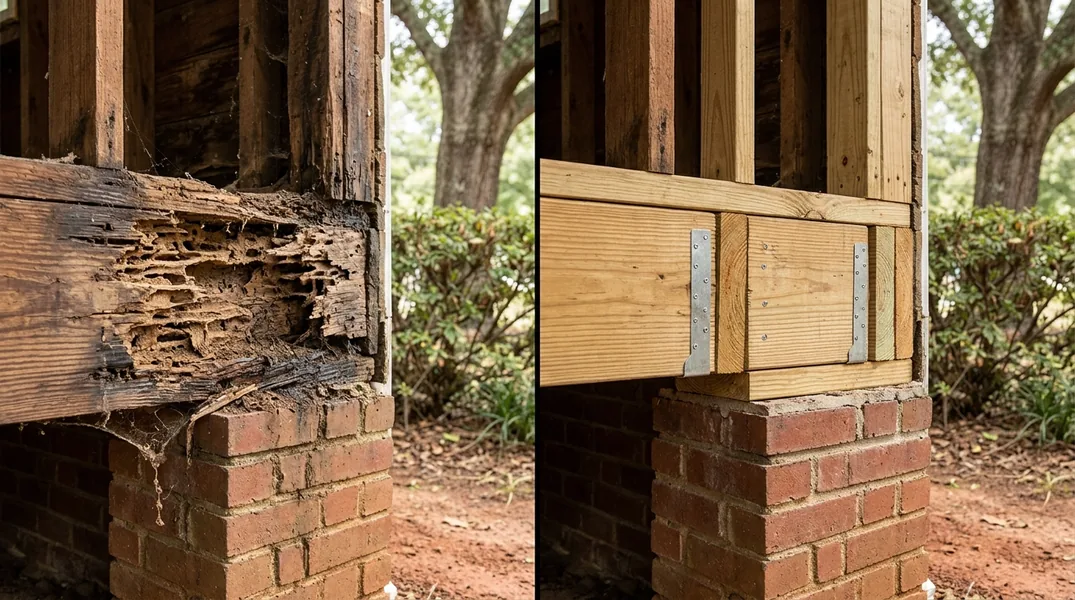
Why Montgomery's Climate Creates the Perfect Storm for Wood Damage
Montgomery sits in Alabama's warm, humid subtropical zone, which is essentially an open invitation for termites and wood rot. The combination of high humidity, moderate winters that never truly kill off pest populations, and frequent rainfall creates ideal conditions for both destructive forces to thrive year-round. Unlike northern states where freezing winters naturally suppress termite activity, Montgomery homeowners face active pest pressure almost every month of the year.
Wood rot, also called dry rot or wet rot depending on the moisture source, spreads faster in warm, damp environments. The region's humidity levels mean that even small leaks or poor drainage can lead to serious structural damage within months rather than years. Termites, meanwhile, are attracted to the moisture that accumulates in crawl spaces, basements, and around foundation perimeters. Many older homes in the area were built without modern moisture barriers, making them especially vulnerable to both termites and fungal decay.
Recognizing the Early Signs of Termite Damage
Catching termite damage early can save thousands in repair costs. The most common signs of termite damage include hollow-sounding wood, especially in structural beams, floor joists, and door frames. If you tap on wood and it sounds papery or hollow, termites may have already eaten away the interior while leaving a thin shell. Another telltale sign is mud tubes, which termites build from the soil to your home's wood structure. These pencil-sized tubes appear on foundation walls, piers, and crawl space beams and indicate active termite highways into your home.
Sagging floors, buckling walls, and doors or windows that suddenly stick or won't close properly are also warning signs. Homeowners sometimes notice small piles of sawdust-like droppings (called frass) near infested wood. If you see termite swarmers (winged termites) inside your home during spring or early summer, an infestation is likely already established. Don't wait to investigate these symptoms. The longer termites feed, the more structural integrity your home loses, and the higher your eventual termite damage repair costs will be.
Wood Rot and Dry Rot: Silent Threats to Your Home's Structure
Wood Rot & Dry Rot Repair is one of the most overlooked maintenance issues for homeowners. Wood rot develops when moisture penetrates wood and fungal spores begin breaking down the wood's cellular structure. Unlike termites, which actively consume wood, rot simply causes the wood to decay and lose strength. This makes rotted wood especially dangerous for load-bearing elements like beams, posts, and floor joists. A beam that looks solid on the outside might be 50 percent decayed internally, creating a hidden structural hazard.
Dry rot, despite its name, requires moisture to develop. It typically appears in areas with poor ventilation and chronic dampness, such as crawl spaces, attics with roof leaks, and around foundation perimeters. You might notice soft, spongy wood, peeling paint, or discoloration around window frames and door jambs. Wood affected by rot often feels lighter than normal wood and can be easily gouged with a screwdriver. If you discover rot in any structural element, professional Wood Rot & Dry Rot Repair is essential to prevent collapse or further damage.
How Structural Damage Spreads and Why Quick Action Matters
Once termites or wood rot take hold, they spread aggressively if left unchecked. Termites don't stop at one joist or beam; they systematically tunnel through connected wood members, weakening an entire structural system. Wood rot spreads through spores and can jump from one piece of wood to another, especially in damp crawl spaces where moisture is constant. What starts as damage to one floor joist can eventually compromise the entire Floor Joist & Subfloor Repair system, leading to sagging floors, cracked drywall, and doors that won't close. The longer you wait, the more extensive the damage becomes, and the more expensive the repairs.
Structural damage also compounds other problems. Weakened floor joists can lead to moisture accumulation in crawl spaces, which then attracts more termites and accelerates rot. A small roof leak that causes dry rot in one rafter can eventually compromise an entire roof system if not addressed. In severe cases, Beam Replacement & Load-Bearing Wall Removal work becomes necessary, which is far more costly than catching and repairing damage early. This is why regular inspections and prompt professional assessment are critical for homeowners in Montgomery.
Termite Damage Repair Cost in Montgomery: What to Budget
The pricing for termite and wood rot repairs varies widely depending on the extent of damage, the structural elements affected, and the repair methods required. Minor surface damage to non-structural wood might cost between $500 and $2,000 to repair. However, if termites have compromised floor joists or if you need Floor Joist & Subfloor Repair, costs typically range from $3,000 to $10,000 or more. Extensive structural damage requiring Beam Replacement & Load-Bearing Wall Removal can easily exceed $15,000 depending on the scope of work.
The best way to understand your specific repair costs is to schedule a free estimate with Montgomery Carpentry. Our team will inspect the damage, assess structural integrity, and provide you with a detailed pricing breakdown. Prevention through regular inspections is far more cost-effective than major repairs, so don't delay if you suspect a problem. Call us at (334) 721-7938 to discuss your situation and get a clear picture of what repairs will cost.
Next Steps: Protecting Your Montgomery Home
If you suspect termite damage or wood rot in your home, the first step is a professional inspection. Montgomery Carpentry specializes in identifying both visible and hidden damage, and we can recommend the most effective repair strategy for your situation. Early detection and repair not only saves money but also protects your family's safety and your home's long-term value. Don't ignore soft spots, hollow wood, or signs of pest activity.
Contact Montgomery Carpentry today for a free estimate and expert guidance on protecting your home. You can reach us at (334) 721-7938 or visit our website at https://montgomery-carpentry.com. Our experienced team is ready to assess your property and provide the professional repairs your home needs to stay safe and structurally sound.
Looking for a professional carpentry contractor in Montgomery? Montgomery Carpentry responds fast for all your carpentry needs.
Get a Free QuoteOur services: Wood Rot & Dry Rot Repair · Termite Damage Repair · Floor Joist & Subfloor Repair